

Supreme Court Unclean Hands Bench Dismisses Appeal After Finding Suppression of Crucial MoU Amounts to Mala Fide Conduct.
Supreme Court Unclean Hands: The Supreme Court has held that a plaintiff who approaches the court with unclean hands by suppressing material facts cannot claim the equitable relief of specific performance
POONCH MIRROR NEWS DESK MARCH 11,2026
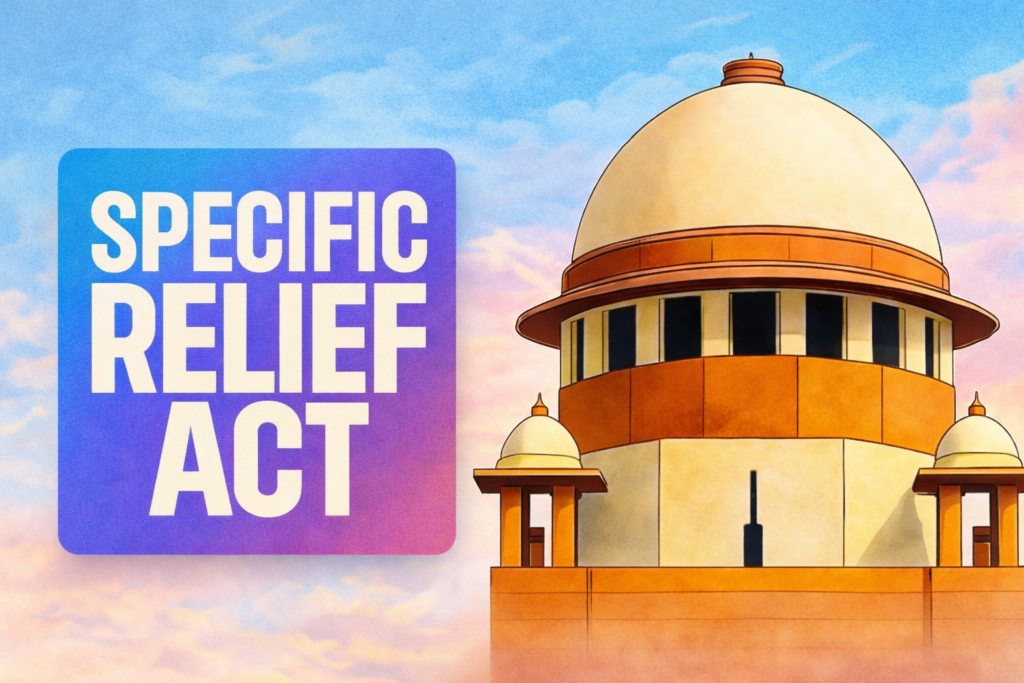
NEW DELHI, MARCH 11 — The Supreme Court has held that a plaintiff who approaches the court with unclean hands by suppressing material facts cannot claim the equitable relief of specific performance, reaffirming the fundamental principle that he who seeks equity must do equity.
A bench comprising Justices Prashant Kumar Mishra and Prasanna B. Varale dismissed a suit seeking specific performance of an agreement to sell on Tuesday (March 10), observing that the conduct of parties assumes paramount importance in such cases.
“In a suit for specific performance, the conduct of the parties is significant as it assists the Court in evaluating the evidence to find out the bona fides of the parties at the time of execution of the agreement,” the Court observed.
The bench further stated: “Even a slight doubt in the mind of the Court that the plaintiff was not acting bonafidely and that the material facts, having bearing on the agreement, have been withheld in the agreement itself and from the Court also, the equitable and discretionary relief has to be denied.”
The case arose from an appeal filed by the plaintiff seeking enforcement of an agreement to sell. During proceedings, it emerged that the plaintiff had deliberately suppressed a Memorandum of Understanding (MoU) executed between him and the respondent-defendant.
The suppressed MoU, marked as Exhibit B-2, contained terms that fundamentally contradicted the plaintiff’s claim that the transaction was a genuine sale agreement. The respondent contended that the MoU revealed the true nature of the transaction that the agreement to sell was merely a security arrangement for a loan advanced by the appellant.
The trial court had initially decreed the suit in favour of the plaintiff. However, the High Court set aside this judgment, holding that the plaintiff’s concealment of the MoU a document essential to determining the true character of the transaction was fatal to his claim.
Upholding the High Court’s decision, the Supreme Court observed that the plaintiff’s conduct fell squarely within the principle that a party seeking equitable relief must approach with clean hands.
“A plaintiff approaching the Court with unclean hands, like in the present case the plaintiff having withheld the document i.e., MoU (Exhibit B-2), as the same was nowhere mentioned in the plaint the present was a fit case for denial of relief of specific performance,” the bench remarked.
The judgment reinforces the well-settled legal position that specific performance being an equitable remedy, the discretion vested in courts must be exercised only in favour of parties who demonstrate complete transparency and good faith.
The Court’s observation that “even a slight doubt” regarding the plaintiff’s bona fides warrants denial of relief underscores the high standard of conduct expected from those seeking equitable remedies.
Finding no ground to interfere with the High Court’s reasoned decision, the Supreme Court dismissed the appeal.
Read the full judgment on the Supreme Court’s official website
In a related contract law case last month, the Court further clarified..



Leave a Reply