

A Special Investigative Report by: Poonch Mirror:
The Echoes
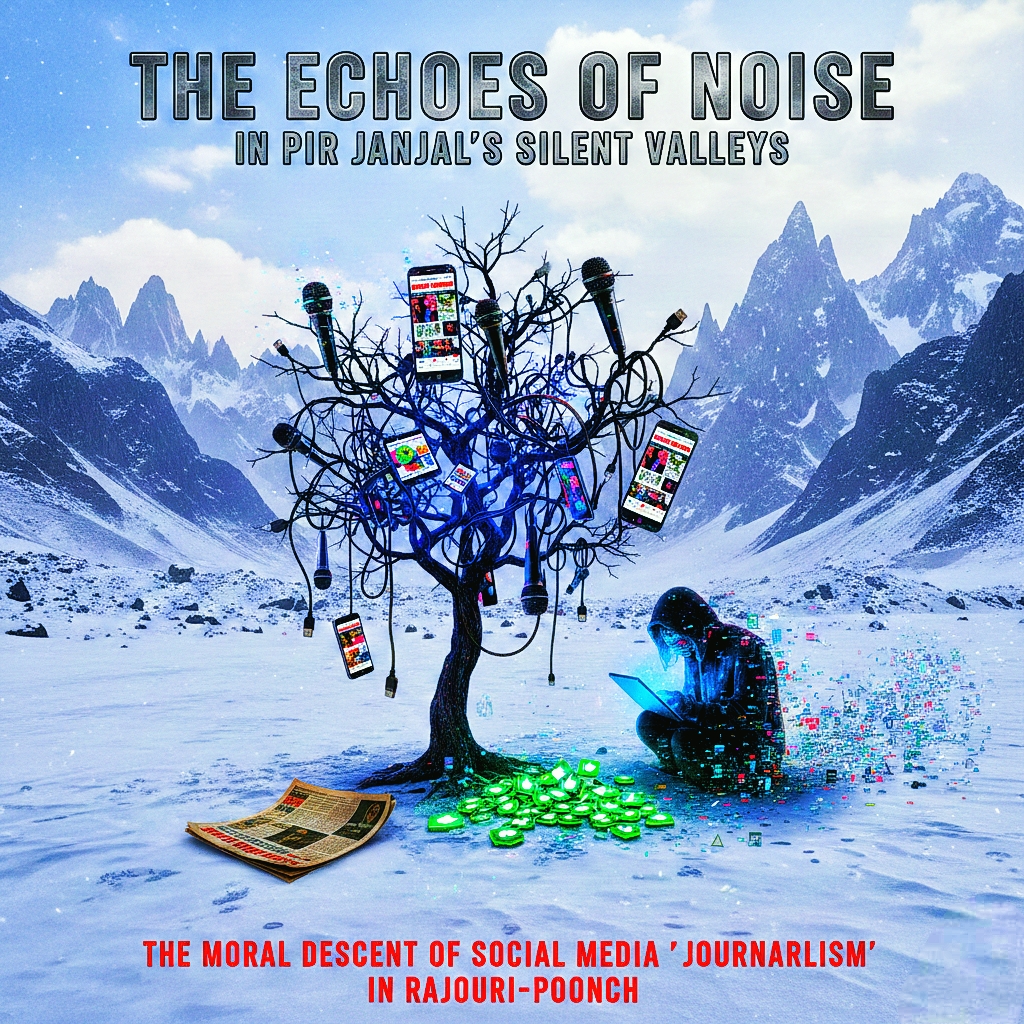
The land of Pir Panjal. Where mountains rise to converse with the skies, where rivers have flowed carrying centuries of stories, where the fragrance of flowers in the valleys becomes history. Rajouri and Poonch. This is the region whose soil has witnessed the eras of kings, the coming and going of Mughals, the rule of Sikhs, and then the ups and downs post-independence. Yet today, this very region is grappling with a new kind of war. This war is not fought with guns or cannons. It is fought via smartphones, in the name of social media pages, and its battlefield is our precious social fabric. The bazaar of Rajouri, where once hill folk songs resonated, now echoes with the sounds of mobile phones. The valleys of Poonch, where shepherds’ melodies were once heard by grazing sheep, now resonate with the false slogans of “social media journalists.” What is happening to our region? The Pir Panjal region has historically been a model of a unique social harmony. In Rajouri-Poonch, Muslims, Hindus, and Sikhs have lived together for years. The people here did not abandon each other even in difficult times. Even after the riots of 1947, after the wars of 1965 and 1971, the people here maintained mutual trust. But what is happening today? The so-called journalists of social media, most of whom belong to this very region, are the ones intent on destroying this historical harmony. These journalists are, in fact, click-baiters, who incite emotions in their videos and posts, create communal tension, and are forcing the loss of pleasant old memories. A strange custom has emerged in the villages of Rajouri-Poonch today. If there is a dispute in a family, if there is a disagreement in a household, immediately some social media journalist brings the matter to their page. Without any verification, without hearing both sides, videos are made solely to spread sensationalism. Several villages in Poonch have witnessed incidents where personal family matters have been turned into public entertainment. Several youth in the region are now using social media as a weapon for blackmail. They make private videos of people, and then threaten them that if money is not paid, these videos will go viral. Last year, in Rajouri town, three such incidents came to light where young girls were blackmailed for their minor mistakes. Fake news is being created on issues like weather changes, water shortages, and road repairs. In the remote areas of Pir Panjal, where correct information arrives late, this fake news spreads rapidly. Sometimes it is said that the government has cut off water, sometimes that hospitals are closing. Result? Anxiety among the public and anger against the government. Local politicians are now hiring these “social media journalists.” They are being paid to spread their propaganda. This process intensifies even more during election times. False promises, fake cases against opponents, images of fictitious development works all are being presented in the name of “news.” What is happening to Our Youth? The youth of Pir Panjal have always been hardworking and brave. The boys here used to join the army, the girls used to become teachers. But today, a new dream is visible: becoming a social media star. The problem is not just that these youth are using social media. The problem is: • Lack of Ethics: They are unaware of the basic ethics of journalism. • No Sense of Responsibility: They do not understand how fake news can harm an entire village. • Lust for Instant Fame: They want to become famous overnight. • Economic Compulsion: Due to unemployment, this seems an easy path. The elders of the region, who have seen difficult times, today watch helplessly as their children and grandchildren are destroying society. Hajji Muhammad Shafi, an elder from Rajouri, says: We never thought that our own children would auction our honor. Earlier, if there was a disagreement, we would sit in a panchayat. Now all this has come to the mobile. The culture of Pir Panjal has always been renowned. The folk tales, songs, dances, customs, and traditions all reflected a particular sophistication and respect. But today: • Abuse Has Replaced Songs: Where once hill songs were sung, now abuse is given in videos. • Insolence Has Replaced Respect: Instead of respecting elders, the trend is to make videos of them and mock them. • Division Has Replaced Unity: The society that always stayed together is now being divided by lines of separation. The question arises whether the law can do anything against these social media journalists? The reality is: • Absence of Cyber Cells: There are no proper arrangements in RajouriPoonch to deal with cybercrime. • Lack of Public Awareness: People do not know where to report such matters. • Difficulty in Collecting Evidence: After content is deleted, collecting evidence becomes difficult. • Problem of Access to Central Government: The local administration lacks resources. In this entire crisis, the greatest damage is being done to real journalism. The conditions have become difficult for those journalists of Rajouri-Poonch who have been working honestly for years. • Public Trust Has Diminished: People no longer believe any news. • Verified Information from Sources: It has become difficult for real journalists to obtain information from sources. • Economic Pressure: Traditional journalists are earning less compared to social media journalists. Why Have We Strayed from the Path? Psychological Analysis: • Desire for Instant Gratification: The immediate gratification from likes and shares is attracting youth. • Distance from National Media: Issues of Pir Panjal get less coverage in national media, so locals have become media themselves. • Failure of the Education System: Our education system is not teaching media literacy to the youth. Economic Analysis: • Unemployment: Not getting jobs, youth are starting to see social media as a source of livelihood. • Easy Earnings: Thousands of rupees can be earned if a video goes viral. • Digital Divide: The difference in digital access between urban and rural areas is also a reason. Immediate Measures: • Establish Cyber Cells: Cybercrime cells should be established in Rajouri and Poonch. • Public Awareness Campaign: People should be taught how to identify fake news. • Local Media Council: A local media council should be formed to uphold ethics. • Long-term Solutions: • Change in Educational Curriculum: Media literacy should be made a compulsory subject in schools. • Training for Local Journalists: Real journalists should be given modern training. • Local News Portals: Quality news portals in local languages should be started. • Alternatives for Youth: Creative work opportunities should be created for the youth. Social Measures: • Council of Elders: A council of elders should be formed in every village to resolve social issues. • Role of Religious Leaders: Religious leaders should come forward in this matter. • Role of Women: Women should be included in this campaign. The land of Pir Panjal has always kept hope alive even in difficult times. Even today, many young people in this region are doing positive work. Some youth in Rajouri have started a campaign called Speak Truth in which they spread true news on social media. Some students in Poonch have started a “Digital Cleanliness” campaign in which they report fake pages. Our Responsibility: The Pir Panjal region is our heritage. These valleys of Rajouri-Poonch, these mountains, these rivers, these people all are ours. If we close our eyes today, if we think this problem is not ours, then we will be doing a great injustice to our coming generations. The need is that: • Every person starts from their home. • Parents keep an eye on their children. • Teachers show students the right path. • Social leaders step forward. The mountains of Pir Panjal are still as high. These mountains have always taught us patience and resilience. Today, we need to face this new challenge with the same patience and resilience. This is our war. This is our society’s war. And we will surely win this war, provided we do not forget our values, our culture, and our humanity. End This special report is based on a deep analysis of the growing influence of socalled journalists on social media in the Rajouri-Poonch region, the moral crisis spread by them, and its social effects. We aim to present further investigative reports on this issue in the coming days.





Leave a Reply